Morning vs. Nighttime Lantus: Does Injection Timing Matter?
Should you inject Lantus in the morning or at bedtime? Both work, but each has advantages depending on your schedule, hypoglycemia risk, and diabetes type.
"Take it at bedtime" is what most patients hear when they're first prescribed Lantus. But your neighbor's doctor said morning. Your cousin does it at 9 PM. Who's right?
All three of them. Injection timing for insulin glargine is flexible, that flexibility is actually one of Lantus's design advantages. But the choice isn't entirely arbitrary. Here's what the evidence says about morning versus nighttime Lantus, and how to pick the timing that works best for your situation.
Why Timing Flexibility Exists
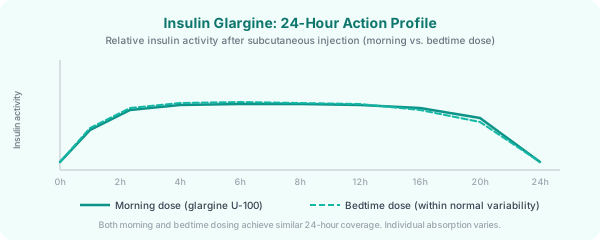
Insulin glargine was engineered to have a flat, peakless pharmacokinetic profile. Unlike NPH insulin (the older basal insulin it largely replaced), Lantus doesn't have a pronounced peak of activity 4–8 hours after injection. This means there isn't a predictable window when hypoglycemia risk is highest, which is what made NPH timing so clinically important.
With Lantus, the insulin activity curve is relatively flat over 20–24 hours. Morning and bedtime doses produce similar 24-hour coverage. The ADA and the Endocrine Society both state that either timing is acceptable. The Lantus prescribing information from Sanofi says to inject once daily "at any time of day, but at the same time every day."
What the Clinical Trials Show
The TREAT study and other large RCTs compared morning versus bedtime Lantus administration and found no significant difference in:
- Fasting glucose control
- A1C reduction
- Overall hypoglycemia rates
- Nocturnal hypoglycemia rates
One nuance: some studies showed slightly higher rates of symptomatic hypoglycemia with bedtime dosing in type 2 patients, not because bedtime was inherently riskier, but because patients taking Lantus at night were more likely to eat dinner, take their dose, and then go to bed without an opportunity to catch a mild low. Morning dosers had a full active day ahead to notice and treat low readings.
The Case for Bedtime Dosing
Bedtime injection is the most commonly recommended timing for type 2 diabetes, and it has practical advantages:
1. Aligns with the dawn phenomenon. Most people experience a natural cortisol-driven rise in blood glucose in the early morning hours (roughly 4–8 AM). Taking Lantus at bedtime means peak insulin absorption (such as it is) tends to occur during the overnight window when hepatic glucose output is highest. This is a modest pharmacokinetic advantage.
2. Easy to pair with the fasting glucose check. Taking Lantus at bedtime and checking fasting glucose in the morning creates a clean feedback loop. You can see each morning whether your dose is working, and adjust accordingly.
3. Less disruption to daytime routine. Many patients prefer not to think about insulin injections during work or school hours.
The Case for Morning Dosing
Morning injection has its own practical merits, particularly for certain patient groups:
1. Lower nocturnal hypoglycemia risk. If you're titrating your dose aggressively, a morning injection means any hypoglycemic episodes are more likely to occur during waking hours, when you can recognize the symptoms, eat, and treat them quickly. Nocturnal hypoglycemia can go unrecognized until morning.
2. Better for irregular sleep schedules. If you work night shifts, travel across time zones frequently, or have variable bedtimes, a morning injection ties the dose to a more consistent anchor point in your day.
3. Preferred by some type 1 patients. Type 1 patients managing Lantus as part of a multiple daily injection regimen sometimes find that morning Lantus dosing fits better with their overall injection routine, particularly if they're injecting rapid-acting insulin at breakfast anyway.
The Most Important Rule: Consistency
Regardless of which time you choose, the rule that matters most is inject at the same time every day. Lantus has a 20–24 hour duration of action. If you take it at 10 PM one night and 8 AM two days later, you've created an 8-hour gap in coverage followed by a 14-hour overlap. This causes glucose instability that has nothing to do with your dose, it's purely a timing artifact.
Set a reminder on your phone. Keep your Lantus and your pen in the same place every day. If you miss your regular time by 2–3 hours, take it when you remember. If you've missed by more than 6 hours, contact your care team for guidance rather than doubling up.
Switching Timing Mid-Treatment
If you want to change from bedtime to morning dosing (or vice versa), don't do it alone. The transition requires careful management to avoid either a coverage gap or a doubling-up overlap. Your diabetes care team can walk you through a safe transition protocol.
Using the Calculator for Timing-Independent Dose Adjustments
Our Lantus dosing calculator works the same way regardless of when you inject. The titration algorithm is based on your fasting glucose, which reflects Lantus's overnight action independent of injection time.
If you're adjusting your dose and also thinking about switching timing, read our overview on fasting glucose targets first, it explains exactly what numbers you're trying to hit and why. For storage and travel tips that go alongside injection timing, see our Lantus storage guide.