Fasting Blood Glucose Targets on Basal Insulin: What the Numbers Mean
What fasting glucose reading should you aim for on Lantus? This guide explains ADA targets, how to read your numbers, and when to adjust your dose.
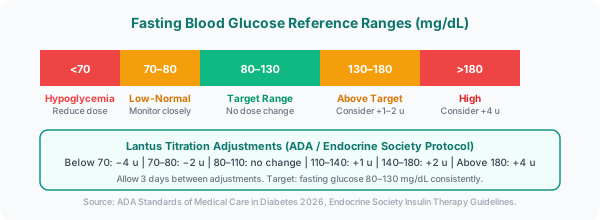
Every morning before you eat, your blood glucose tells a story about how well your Lantus dose is working overnight. Understanding what these numbers mean, and when to act on them, is the core skill of self-managed basal insulin therapy.
The Standard Target Range: 80–130 mg/dL
The American Diabetes Association (ADA) Standards of Medical Care in Diabetes 2026 sets a fasting plasma glucose target of 80–130 mg/dL for most non-pregnant adults with type 1 or type 2 diabetes. The Endocrine Society Insulin Therapy Guidelines use the same range.
This isn't an arbitrary number. It reflects the glucose level at which:
- Hepatic glucose output is adequately suppressed (preventing overnight hyperglycemia)
- The risk of hypoglycemia remains acceptably low (above 70 mg/dL provides meaningful buffer)
- Downstream cardiovascular and microvascular complication risk is substantially reduced compared to chronic hyperglycemia
A fasting glucose consistently in the 90–110 mg/dL range is ideal for most patients. The range extends to 130 mg/dL to allow realistic variation without triggering constant dose adjustments.
Reading Your Numbers: Five Ranges and What Each Means
Below 70 mg/dL, Hypoglycemia
This is the action threshold for immediate dose reduction. A single reading below 70 mg/dL should prompt you to reduce your Lantus by 2–4 units, and to contact your care team if the episodes are recurring. Hypoglycemia this low, especially overnight, carries real risk: if severe, it can cause loss of consciousness.
Don't wait for "a pattern" before acting on a reading below 70. One episode is enough to justify a dose reduction. Our Lantus dosing calculator will flag a recommended dose reduction when you enter fasting values below 70 mg/dL.
70–80 mg/dL, Low-Normal
This range is technically safe but requires close monitoring. A fasting reading of 72–78 mg/dL suggests your Lantus dose is close to the upper limit of what's appropriate. If you're consistently in this range and your readings are stable, hold the current dose. If you see two consecutive mornings below 75 mg/dL, a small reduction (2 units) is prudent, you're one missed meal away from hypoglycemia.
80–130 mg/dL, Target Range
This is where you want to be. No dose change needed. Consistent readings in this range mean your basal insulin is doing exactly what it's supposed to do: suppressing overnight glucose production and giving you a clean starting point before meals each day.
Some days you'll be at 88, some days 122. That's normal glucose variability, don't chase every number with a dose adjustment. The 3-day average smooths out this noise.
130–180 mg/dL, Above Target
A consistent pattern of readings above 130 mg/dL means your Lantus dose needs to come up. The adjustment protocol: if your 3-day average fasting glucose is 130–180 mg/dL and you've had no readings below 70 mg/dL in that window, increase by 2 units and wait 3 days before reassessing.
If you're at 155–175 consistently, expect 3–4 titration steps (over 2–3 weeks) before reaching the target range.
Above 180 mg/dL, Significantly Elevated
Fasting values above 180 mg/dL represent meaningful overnight hyperglycemia. The titration protocol calls for a +4 unit increase at this level. This more aggressive adjustment reflects the larger gap between your current dose and your therapeutic need.
Don't be alarmed if your starting fasting glucose is in the 190–250 range, this is common in patients just starting basal insulin after years of inadequate control with oral agents. The first few weeks of titration usually show fast improvement.
Why Fasting Glucose (Not Random Glucose) Is the Lantus Calibrator
Lantus works during the overnight fasting window. It suppresses hepatic glucose output, the liver's tendency to release stored glucose into the bloodstream even when you haven't eaten. This is most measurable in your fasting glucose reading, taken first thing in the morning before any food, coffee, or medication.
Post-meal glucose readings reflect a completely different process: how effectively rapid-acting insulin (or the body's own bolus response) handles the glucose from a meal. Lantus doesn't influence post-meal glucose. If you're adjusting your Lantus based on a 2-hour post-meal glucose of 190 mg/dL, you're using the wrong signal.
Common sources of inaccurate fasting readings:
- Coffee with milk or cream before the test (raises glucose)
- Dawn phenomenon (natural cortisol-driven glucose rise from 4–8 AM)
- Somogyi effect (rebound hyperglycemia after an unrecognized nocturnal low)
- Stress or illness (acute illness can spike glucose significantly regardless of insulin dose)
When Fasting Glucose Is in Range but A1C Is Still High
If your fasting glucose is consistently 80–130 mg/dL but your A1C remains above 7.5–8%, your after-meal glucose spikes are driving the average up. Lantus doesn't cover this. You'll need either bolus rapid-acting insulin at meals, a GLP-1 receptor agonist, or additional oral agents. Your physician or endocrinologist can guide which option fits your overall treatment plan.
Tracking Your Numbers Effectively
Keep a glucose log, even a simple notes app on your phone is fine. Record date, time, fasting glucose value, and any comments (illness, unusual stress, what you ate the night before). Review 7-day patterns rather than reacting to individual readings.
Use our Lantus dose adjustment calculator to check what the titration algorithm recommends based on your current fasting reading. For a detailed walkthrough of how the 3-day titration rule works in practice, see our insulin titration guide.