Recognizing and Preventing Hypoglycemia on Lantus
Hypoglycemia is the most common side effect of Lantus therapy. Learn to recognize the three severity levels, treat them correctly, and adjust your dose to prevent recurrence.
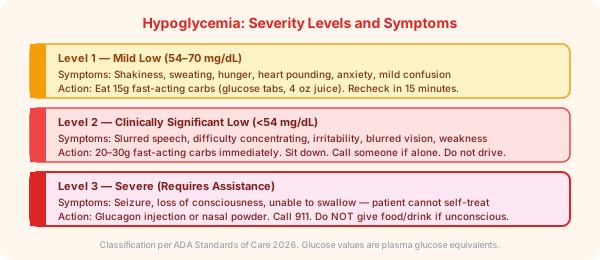
Every patient on insulin therapy faces hypoglycemia risk. With Lantus specifically, the risk is lower than with older insulins like NPH, there's no pronounced peak, so you're less likely to experience a sudden, severe drop. But that doesn't mean the risk is zero. Understanding what hypoglycemia looks like, how to treat it at each severity level, and, most importantly, how to prevent it through dose adjustments is essential knowledge for anyone on basal insulin.
What Counts as Hypoglycemia?
The ADA Standards of Medical Care in Diabetes 2026 classifies hypoglycemia in three levels:
- Level 1: Glucose between 54–70 mg/dL, the "alert value." Patient can self-treat.
- Level 2: Glucose below 54 mg/dL, clinically significant. Requires prompt treatment.
- Level 3: No specific glucose threshold, defined by requiring external assistance. This is severe hypoglycemia.
For people on Lantus, the most common scenario is level 1, a mild low that you catch with symptoms or a routine glucose check. Level 3 is rare with basal-only insulin therapy but can occur if the dose is significantly too high or if a meal is skipped.
Recognizing Hypoglycemia: What It Feels Like
Mild hypoglycemia (level 1) produces adrenaline-driven symptoms: shakiness, sweating, heart pounding, sudden hunger, anxiety, and a feeling of inner trembling. These are your body's alarm system activating.
Many patients on long-term insulin therapy experience hypoglycemia unawareness, the adrenaline response weakens after repeated episodes, so the warning symptoms become less noticeable or disappear entirely. If you've had multiple hypoglycemic episodes and find you're no longer feeling the usual warning signs, report this to your physician. It's a risk factor for severe, unrecognized lows.
Moderate lows (approaching level 2) often produce cognitive symptoms that are harder to self-identify: difficulty concentrating, slurred speech, irritability, weakness, and blurred vision. Patients sometimes describe a "foggy" feeling or find themselves doing something repetitive without realizing it.
The challenge: when glucose is low enough to impair cognition, you may not realize you need help. This is why education for family members and colleagues is important, knowing what to do if you appear impaired is as important as you knowing what to do.
The 15-15 Rule for Mild Lows
For a level 1 low, use the 15-15 rule:
- Eat 15 grams of fast-acting carbohydrates immediately
- Wait 15 minutes
- Recheck your blood glucose
- If still below 70 mg/dL, repeat
Fast-acting carbs that work well:
- 4 glucose tablets (4g each)
- 4 oz (120 mL) of regular juice (apple or orange, avoid large volumes)
- 4 oz of regular soda (not diet)
- 1 tablespoon of sugar or honey
Do not eat a large meal or a high-fat snack as your immediate treatment. Fat slows glucose absorption and delays the recovery. Eat the fast carb, wait, then eat a small protein/fat snack if your next meal is more than an hour away.
Treating Level 2 and Level 3 Hypoglycemia
Level 2 (below 54 mg/dL): Treat with 20–30 grams of fast-acting carbs. Sit or lie down. Don't drive. If alone, contact someone. Follow up with a meal or snack once glucose has risen above 70 mg/dL.
Level 3 (unconscious or unable to swallow): This requires glucagon. Every patient on insulin therapy should have a glucagon kit at home, and family members should know how to use it. Modern options include nasal glucagon powder (Baqsimi) which doesn't require injection, and prefilled glucagon pens (Gvoke). If glucagon isn't available, call 911. Do not attempt to give food or drink to someone who is unconscious, aspiration risk is real.
Adjusting Your Lantus Dose After a Hypoglycemic Episode
A single hypoglycemic episode should prompt a dose adjustment, not just a treatment. The question is: was this a fluke (illness, missed meal, unusual exercise) or a signal that your Lantus dose is too high?
When to reduce the dose:
- A fasting glucose below 70 mg/dL on two or more mornings in the past week
- Recurring mild hypoglycemia at similar times each day
- Any level 3 episode (requires immediate dose reduction and same-day provider contact)
Our Lantus dosing calculator will recommend a dose reduction when you enter fasting glucose values below 70 mg/dL. For a reading of 65 mg/dL, the algorithm suggests a −4 unit adjustment. For a value of 72 mg/dL, it suggests −2 units.
How much to reduce:
- For level 1 hypoglycemia with a cause (missed meal, unusual exercise): consider −2 units and monitor
- For recurrent level 1 or any level 2: reduce by 4 units, recheck fasting readings for 3 days
- After any level 3 episode: contact your physician before resuming your usual dose
Prevention: The Most Important Strategy
The best treatment for hypoglycemia is not having it. For Lantus patients, prevention comes down to:
1. Don't skip meals. Skipping a meal with active basal insulin significantly increases hypoglycemia risk. If circumstances force you to skip or delay a meal, have a small carbohydrate snack to maintain glucose balance.
2. Adjust for exercise. Physical activity increases insulin sensitivity. If you exercise significantly more than usual, fasting glucose the next morning may be lower than expected. For patients who exercise intensely or regularly, discuss dose adjustment with your care team.
3. Avoid alcohol on an empty stomach. Alcohol suppresses hepatic glucose output, the exact same mechanism Lantus targets. Together, they can cause significant hypoglycemia, especially overnight. If you drink alcohol, eat a carbohydrate-containing snack before bed.
4. Titrate conservatively. When increasing your Lantus dose, the minimum effective increase is 1–2 units. Aggressive titration (+6–8 units at a time) shortcuts the 3-day waiting period and risks overshooting. For the titration protocol, see our guide on the 3-day insulin titration rule.
5. Have glucose tablets accessible at all times. In your bag, in your car, on your nightstand. When you're low, you don't want to be searching the kitchen at 2 AM. Glucose tablets are cheap and don't expire quickly.
Driving and Hypoglycemia
Most diabetes organizations and many jurisdictions recommend checking glucose before driving if you're on insulin therapy. If your glucose is below 90 mg/dL before getting behind the wheel, eat 15 grams of carbs and wait 15 minutes before driving. If you experience hypoglycemia while driving, pull over safely immediately.
This isn't just a guideline, in some countries and U.S. states, driving while experiencing a hypoglycemic episode with impaired cognition constitutes impaired driving, regardless of whether alcohol is involved.
Use our calculator to review whether your current dose needs adjustment if you're experiencing recurring hypoglycemic episodes. And check your fasting glucose targets to understand exactly what range to aim for on a stable dose.