Lantus Dosing for Type 2 Diabetes: Year One Guide
Starting Lantus for type 2 diabetes? This guide covers what to expect in the first 12 months, from starting dose to titration to knowing when to add bolus insulin.
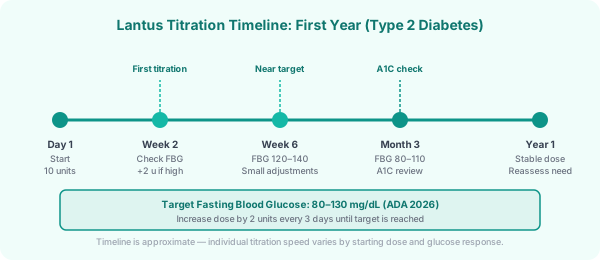
Starting Lantus when oral diabetes medications haven't controlled your glucose well enough is a significant step. Most patients feel some anxiety about self-injecting insulin, that's normal. What helps is knowing exactly what the first year looks like, so there are no surprises.
This guide walks through Lantus dosing for type 2 diabetes from day one to month twelve, including how titration works, what numbers to target, and the signs that your regimen might need a bigger adjustment.
Why Type 2 Patients Need Basal Insulin (Not All Oral Drugs Do the Same Job)
Metformin, GLP-1 receptor agonists, SGLT-2 inhibitors, and sulfonylureas all lower blood glucose through different mechanisms. But none of them directly replace the liver's regulation of overnight glucose output the way basal insulin does.
In advanced type 2 diabetes, the pancreas can't produce enough insulin to suppress hepatic glucose output during fasting. The result: fasting glucose is chronically elevated, often 160–220 mg/dL, even when post-meal glucose is reasonably managed. This is exactly what Lantus fixes, it suppresses the liver's overnight glucose production, bringing fasting readings down into the target range.
Month 1: Starting Dose and First Titration
Most type 2 patients start Lantus at 10 units per day, or a weight-based equivalent if they're above 75 kg. (Use our Lantus dosing calculator to get the exact starting dose for your weight.) The injection is typically given at bedtime, but morning injection is also acceptable, more on timing in a separate guide.
In the first week, check your fasting glucose every morning before eating or drinking anything except water. Write it down, you'll need a few days' worth of readings to make the first dose adjustment.
After 3 consecutive fasting readings, apply the titration rule: if the average is above 130 mg/dL and no single reading was below 70 mg/dL, increase by 2 units. Wait 3 more days, check 3 more readings, and repeat. This 3-day protocol is based on the INSIGHT trial and is the standard endorsed by most endocrinology practices.
At 10 units, most patients see their fasting glucose fall by 20–40 mg/dL within the first two weeks. That improvement is real, but it usually doesn't bring numbers into the target range immediately. Titration takes time.
Months 2–3: Reaching Your Effective Dose
The majority of type 2 patients reach a stable, effective Lantus dose somewhere between 15 and 40 units per day, though the range extends further in both directions for patients with very low or very high insulin requirements.
During months 2–3, you're still titrating every 3 days based on your fasting glucose. The increases slow down as you approach the target range of 80–130 mg/dL. When your fasting glucose is consistently in this range, no highs above 130, no lows below 70, you've found your effective dose.
A few things that trip people up during this phase:
- Using post-meal glucose instead of fasting glucose. Lantus targets overnight hepatic glucose output. Post-meal numbers are influenced by bolus insulin (or its absence) and meal content. They don't guide Lantus titration.
- Adjusting too fast. Patients who increase by 4 or 6 units every day rather than 2 units every 3 days can overshoot the effective dose and experience hypoglycemia. Stick to the protocol.
- Skipping doses. Lantus works by maintaining a steady insulin level in the bloodstream. Missing a day disrupts this. If you miss a dose, take it as soon as you remember, unless it's almost time for the next dose, in which case skip it and resume the regular schedule.
Month 3 Check-In: The A1C That Matters
At the three-month mark, most clinicians order an A1C. If fasting glucose is now in range but A1C is still above 7–8%, that tells you something: post-meal glucose spikes are still contributing to elevated average glucose. Lantus isn't fixing that, it's not designed to. Basal insulin only controls fasting glucose. Post-meal control requires rapid-acting insulin or other agents.
This is the point where many type 2 patients are evaluated for adding a bolus insulin (like Humalog or Novolog) at the largest meal of the day, a strategy called basal-plus therapy. If you're approaching this conversation with your doctor, check our guide on basal-bolus therapy.
For patients who reach their A1C target through Lantus titration alone, monthly monitoring of fasting glucose is usually sufficient to maintain stability.
Month 6–12: Dose Stability and Reassessment
Once you reach a stable dose with fasting glucose in range, Lantus dosing doesn't change often. Most patients maintain their dose for months or years unless a major life change occurs, significant weight gain or loss, a new medication, a change in physical activity level, or an illness.
Common reasons the effective Lantus dose increases over time in type 2 diabetes:
- Weight gain (increased insulin resistance)
- Progressive beta-cell decline (less endogenous insulin production over time)
- High-dose corticosteroids (dramatically increase insulin resistance)
- Starting certain psychiatric medications
Common reasons the dose may need to decrease:
- Significant weight loss through diet, exercise, or bariatric surgery
- Starting a GLP-1 receptor agonist (these have a strong A1C-lowering effect that can combine with Lantus to cause hypoglycemia)
- Improved physical activity level
- Renal disease progression (kidneys help clear insulin; impaired clearance means longer duration of effect at the same dose)
When to Call Your Care Team
Self-titration with a structured protocol is generally safe. But contact your physician, endocrinologist, or certified diabetes educator if:
- You're having fasting glucose below 70 mg/dL more than twice a week, this suggests over-treatment
- You've reached 50 units and fasting glucose is still above 130 mg/dL, at this point, splitting the dose or adding bolus coverage is usually more effective than continuing to increase Lantus
- You're experiencing unexplained weight gain (sometimes a sign that excess glucose is being stored rather than corrected)
- You're pregnant or planning pregnancy, insulin requirements change significantly during pregnancy and require specialist management
Use our basal insulin calculator to track your current dose and check whether your fasting glucose readings suggest a dose change is needed. For more on titration mechanics, read our detailed guide on the 3-day insulin titration rule.